Traditional Upholstery
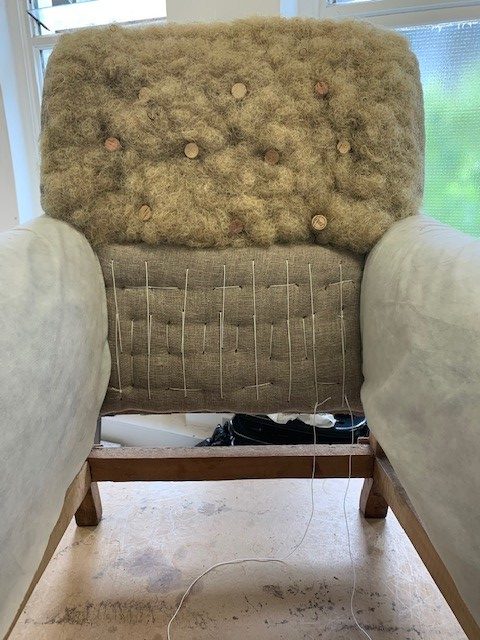
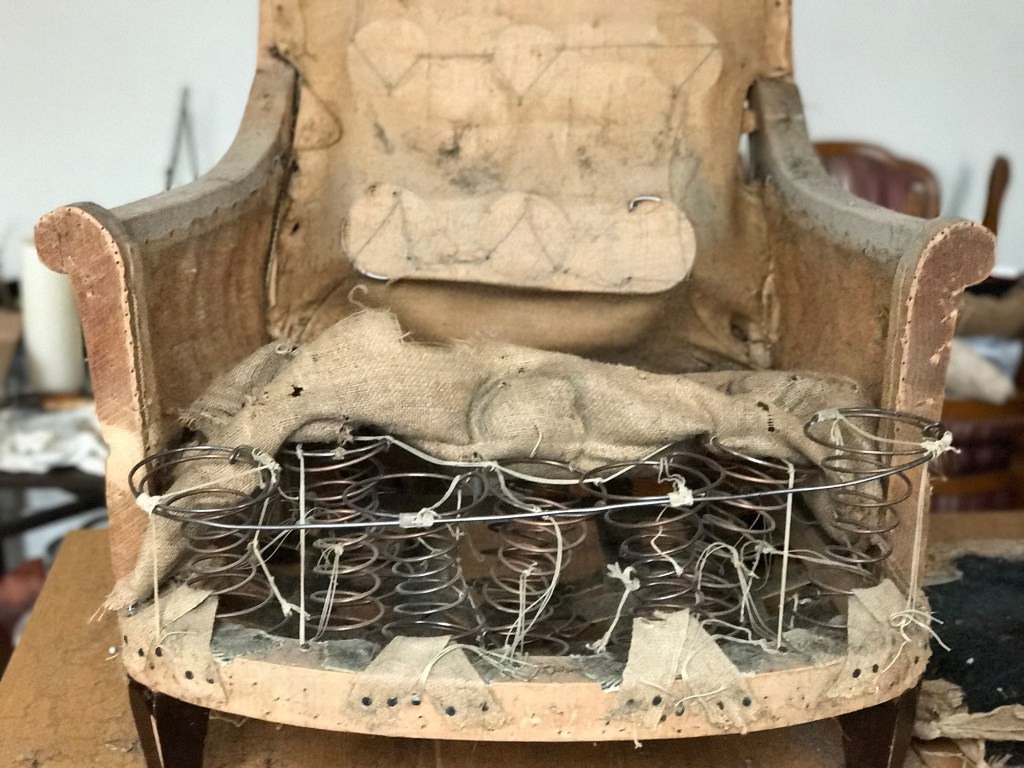
‘Traditional’ techniques involve essential building processes all of which we examine when you bring your older chairs to us.
You’ll find a quick guide here to areas that may be needing attention. We always hope to preserve / keep as much as possible and only fix those things that need fixing! Please also note – this is not a guide to do traditional upholstery! However, we are very happy to take you through that step by step in person.
Webbing
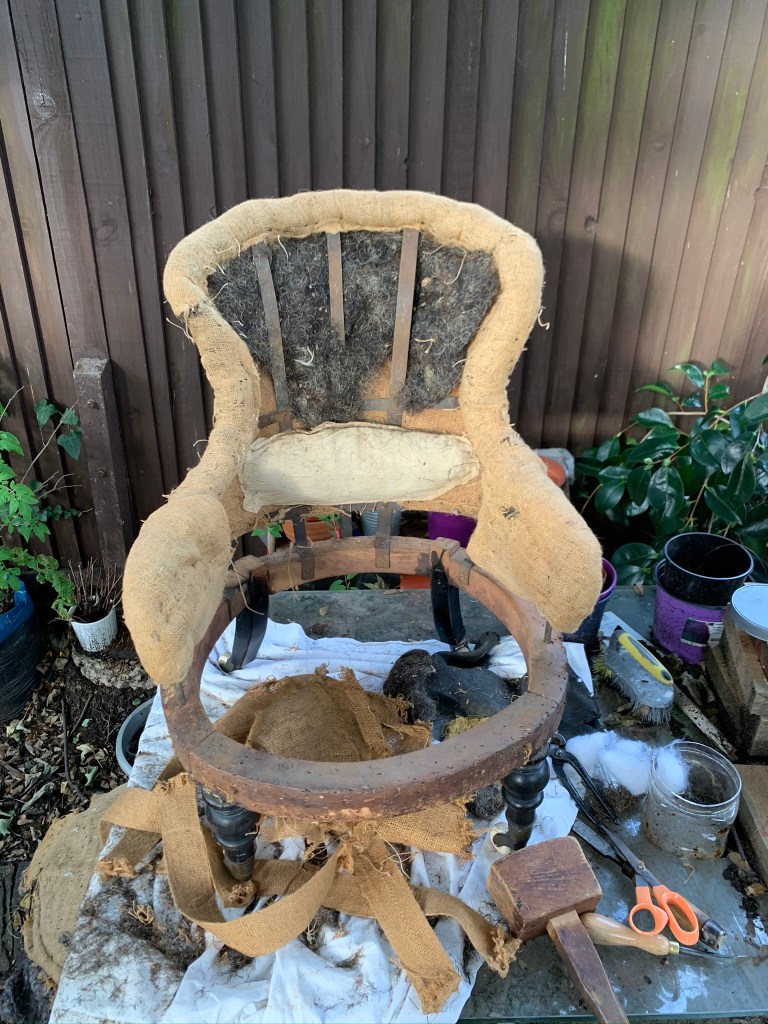
This is stretched across the base and back of the furniture frame. It should be taught and firm to the touch.
You will not necessarily see it unless you have removed the back or bottom fabric. But if you have a saggy seat – this could be one reason.
Springs & sprung units
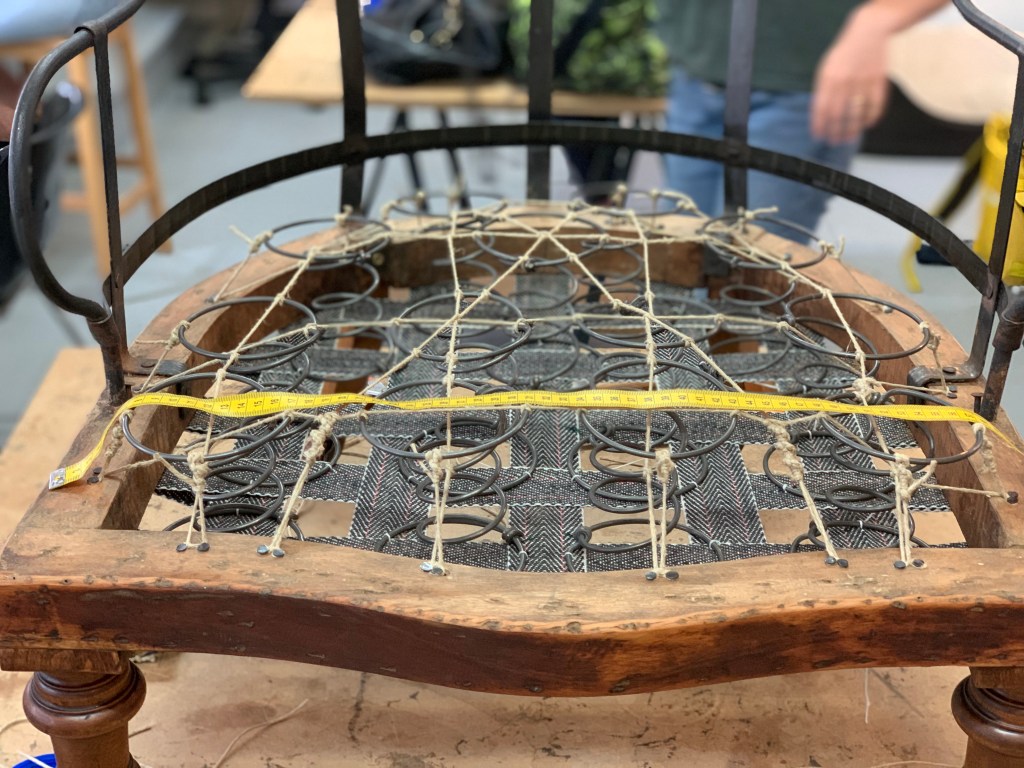
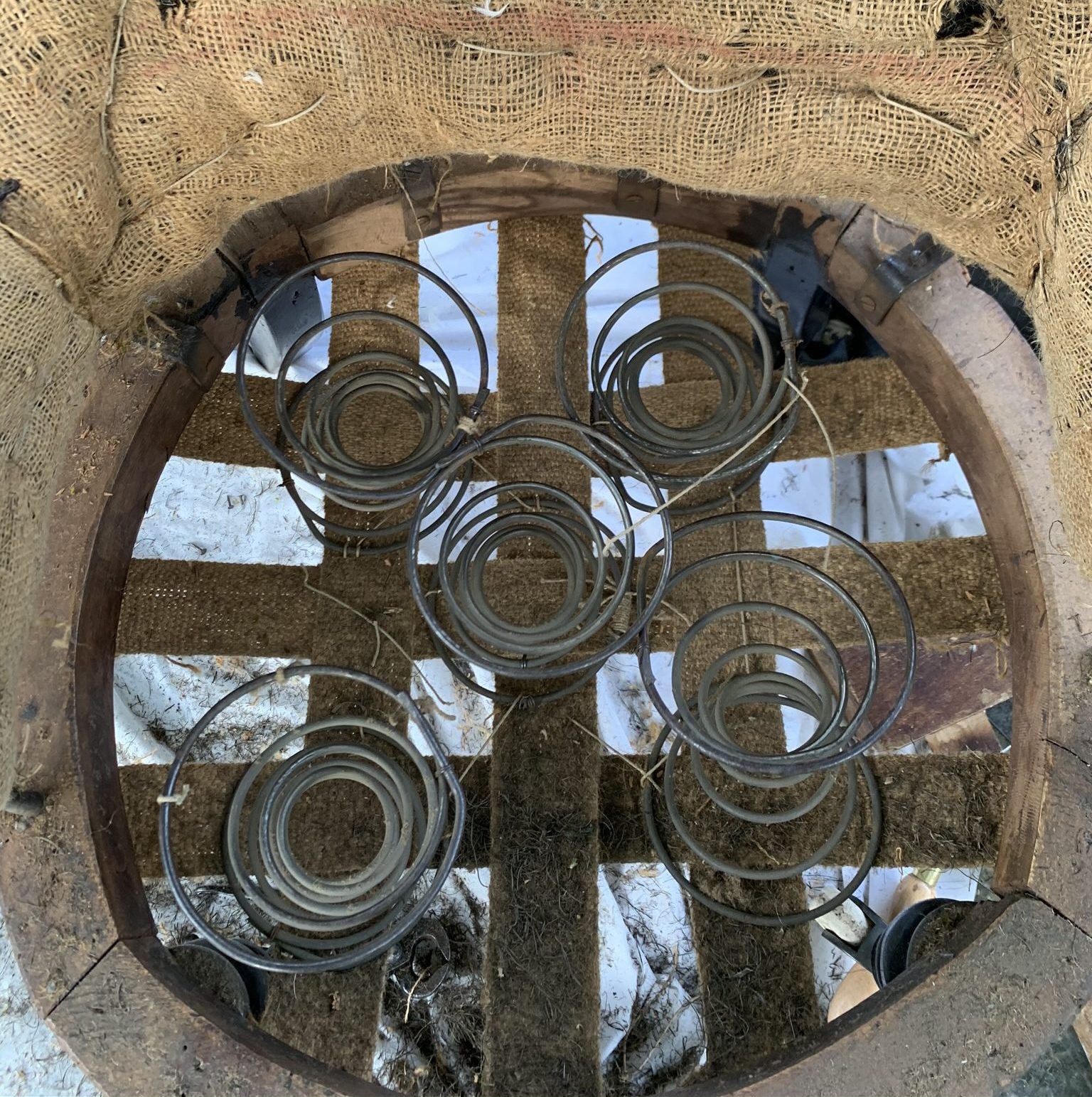
Springs are sewn to the webbing to support the seat. These can also be sewn or attached to the back and arm of chairs. Over use, wear and tear, stress – can cause these to snap or bend. We will always try to save and reuse what we can.
In the mid 1800’s a chap called Samuel Pratt designed units to hold springs in place using whale bone. By the 20th Century ‘box spring units’ were common in all types of furniture in the home as well as in trains, cars, planes and more.
A sign of trouble can be ‘clunky’ or clicking noises, saggy sections or areas of the furniture or sometimes the springs can stick right through the top fabric or hang out of the bottom.
Hessian
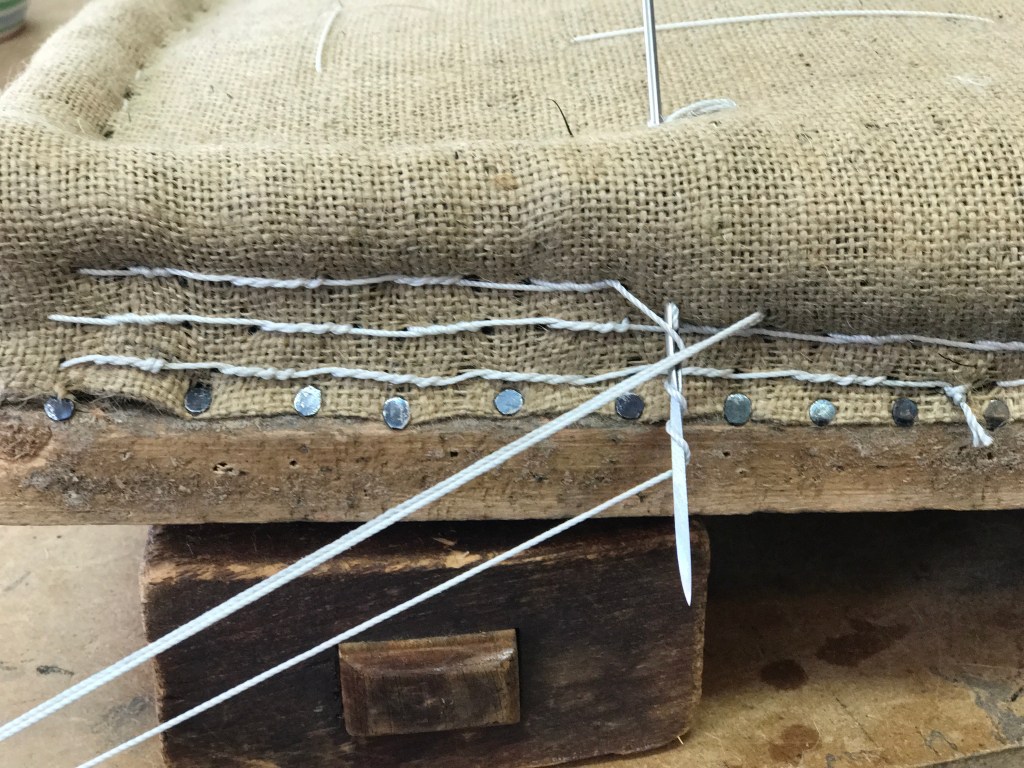
Hessian, a natural product woven to create fabric, is used in various layers of upholstery whether traditional or modern. In traditional upholstery it is used to secure, and provide shape to, the stuffing. Hessian is durable but will inevitably deteriorate at points where there is rubbing and constant use, so soften needs replacing or additional hessian pieces can be stitched in to help re-strengthen the layers.
Other material layers within your traditional furniture
Calico and Linen Scrim are also used in building up your traditional furniture. These are tacked into place and can be sewn/ stitched to further secure the shape of the chair and hold the stuffing in place.
Wadding and felts are other layers that are added eg to stop coir (coconut fibre) and hair working its way through the fabric layers. These also help provide comfort and consistent feel across your seat, back or arm.